
The Water Wolf
Medieval and contemporary flooding

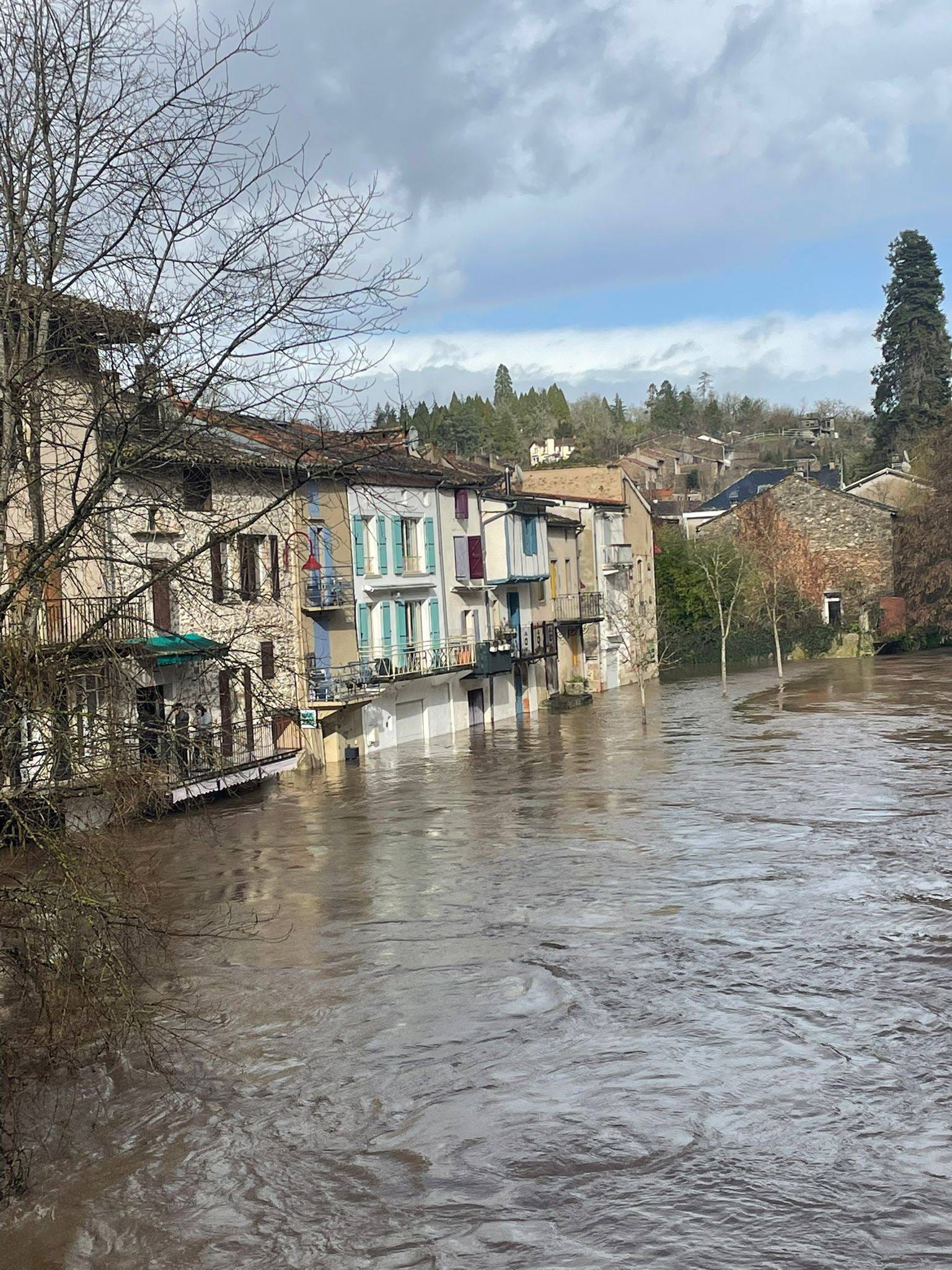
A few weeks ago, on the night of Thursday 12 February 2026, my village and my medieval house in southwest France experienced a major flood – the worst in the 20 years I have lived here. The river Viaur, which I live next to, rose by 6 metres and was flowing over the bridge rather than under it. The flood – La Crue – happened after back-to-back storms and 40 consecutive days of relentless, torrential rain in France. Flooding occurred across the country and my region, with its huge rivers – the Garonne, the Tarn, and the Lot – was among the worst hit. Hundreds of municipalities, including my area, received natural disaster status. The benign summer river transformed into a raging torrent – the Water Wolf – as the swollen, mud-laden river thundered past my balcony with whole trees hurtling down and islands of debris flashing past.
The photo above was not taken at the height of the flood, which occurred at 1am. In my cave (the basement of the house), 1.5 metres of river flowed in. There was a power cut and as darkness fell, the river was still rising. Friends were evacuated by the pompiers (the local fire brigade) by powerboat. My house was cut off by water on both sides. I evacuated, wading through waist-high water with my cats – one in a catbox and the other in a shopping bag. Now, two weeks later and the clean-up and de-stressing is still going on with thick, molten chocolate mud sluiced out of our houses, wooden doors and floors buckled, some things salvaged, many things not.
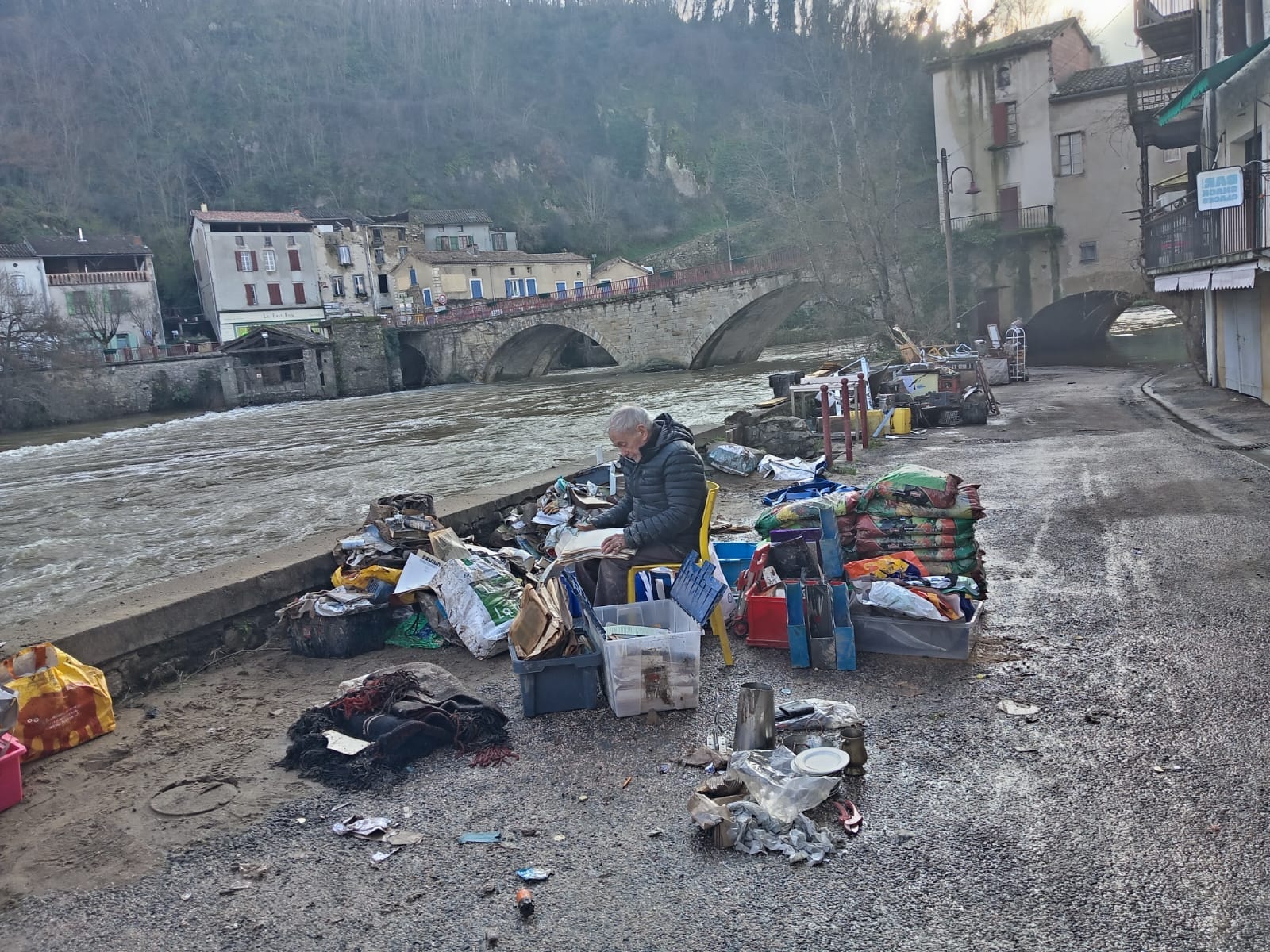
Distress, exhaustion, humour, kindness all emerged in the crisis. Neighbours worked alongside each other and the pompiers in a spirit of resilience.
All the old houses along my stretch of the river have caves built to withstand the river’s winter visits. In the medieval period, flooding likely happened every year with the rains and thaws of winter and without the modern barrages that control the flow of the river now (if they can). There were many devastating floods in the Middle Ages. Carolingian chronicles in the ninth century report floods, excessive rains, and intense storms.1 The hero of my Conquest trilogy of novels, Haith, is a sheriff in Wales, who has escaped from flooding in Flanders and the devastations of what he refers to as ‘the water wolf’.2
Saltmarshes were exploited and peat was extracted, which contributed to coastal catastrophes. The St Mary Magdalene flood in 1362 was the largest flood in central Europe, affecting vast swathes of Germany and parts of Italy. Bridges were washed away. Thousands of people died. In addition to high-water markers for floods, medieval ‘hunger stones’ were recently found in the Elbe River in the Czech Republic, which marked low-water points when people experienced drought and famine.3
Historian Petra van Dam has written about an amphibious medieval culture, a way of life adapted to the threats and benefits of rivers and coastal areas.4 The flooding river was destructive and terrifying but rivers also brought the benefits of fertile land, irrigation, mills, fish, woodlands and trade. Medieval people dug canals, drained wetlands, built houses on stilts.
The contemporary rivers are harnassed by barrages for electricity, but it would be a mistake to think that the medieval river was untouched by human intervention. The medieval river was full of water mills powering the production of flour, textiles, and metals. The mills drove mill stones, hammers and bellows.5 The medieval river was the main road carrying trade and travellers. Many tanneries producing leather stood on the riverbanks. The river was the sewer and the rubbish tip. And it was the washing place.
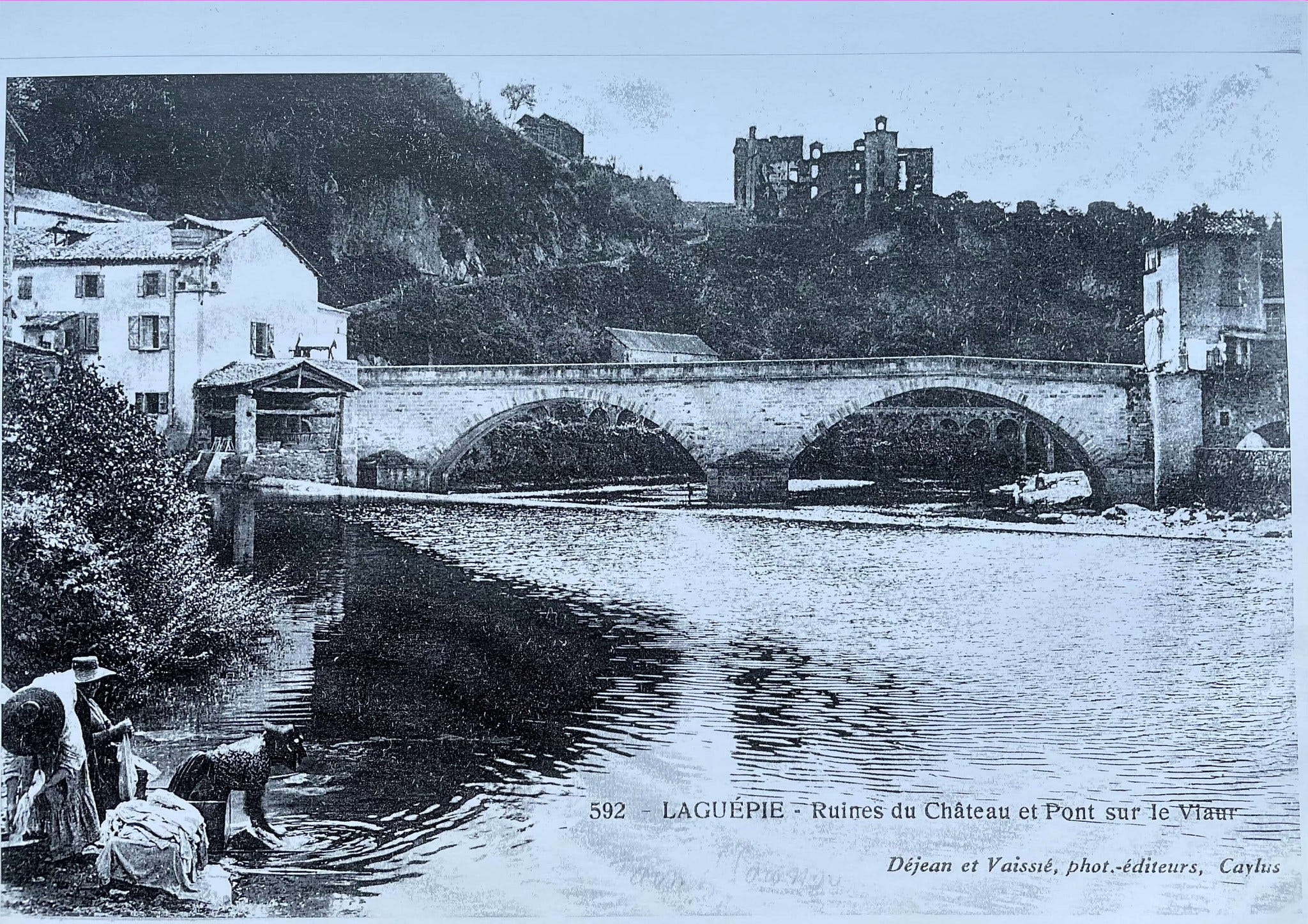
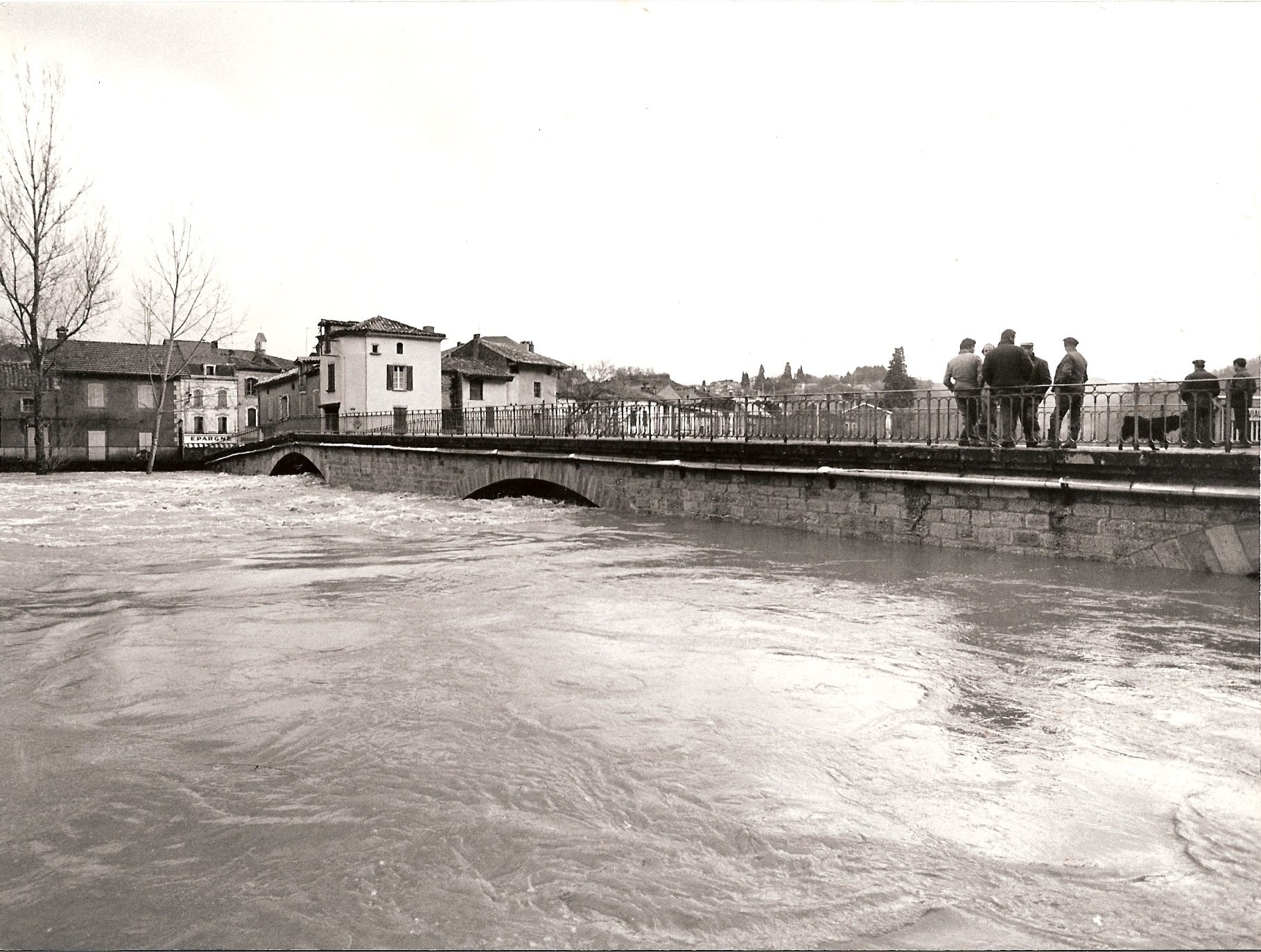
The last extreme flood in my area in recent times was the March 1930 flood.6 Note the near-invisibility of the bridge arches below. This is the same bridge that can be seen in the two images above.
I have a delight in watery landscapes. See my future fiction novella Meanda about a watery exoplanet and an amphibian alien species.7 This penchant for living in proximity to the water wolf has bitten me before. I lived in Pembrokeshire, Wales where terrifically high tides dragged a local bus off the road and into the sea (nobody was hurt). I was living in South Devon when massive storms and high tides destroyed the coastal trainline to London and cut us off for months. I lived in Oxford where the Thames rose up every year to surround us, sending us running for wellingtons and sandbags and watching as fields and parks turned into duck-happy lakes.
I’m looking forward to getting back to the glee of the summer river here in France.

NOTES
Ellen Arnold, ‘Facing Floods in the Middle Ages’, Europe Now, https://www.europenowjournal.org/2018/12/10/facing-floods/
Tracey Warr, Daughter of the Last King, The Drowned Court, and The Anarchy. See https://meandabooks.com
Arnold, ‘Facing Floods’.
Petra van Dam, ‘An Amphibious Culture’, 2016, https://ehc-amsterdam.nl/wp-content/uploads/2016/11/van-dam-2016-amphibious-culture.pdf
See my post on medieval water mills.
See Vanessa Couchman’s, ‘The Flood of the Century in Southwest France, 3-4 March 1930’, Life on La Lune, 3 March 2015, https://lifeonlalune.com/2015/03/03/the-flood-of-the-century-in-southwest-france-3-4-march-1930/
Oh my goodness Tracey! I’m so sorry you had that flood and I hope you didn’t lose too many precious things. I’m glad there was no loss of life. When we visited in 2014 we saw the markings on buildings in Viviers showing where the water had reached. We had just lost our home to the flood in Southern Alberta, where four people died. My husband was rescued with our pets, by helicopter. So that sight really triggered him. We have been through four major floods in our 50 years together. I know what you are going through. I hope you can get everything cleaned up and back to normal soon. We had to move away from that town as the situation was too stressful. Please take good care.
Good grief, your sense of "adventure" knows no bounds. I'm content to live at the top of a gradient in the UK five minutes walk from the North Sea which regularly rips out the esplanade's railings during a winter storm, or at the very least scours the paint from them. Thanks for sharing. May your brighter weather soon return.