
Medieval Christmas (3)
Christmas scenes and medieval recipes

In the run-up to Christmas, I’m posting a series of medieval Christmas scenes along with related medieval recipes. The scenes are extracts from my published novels. Below the scene, you will find a related medieval recipe and a historical note. You can find details on my novels at Meanda Books.
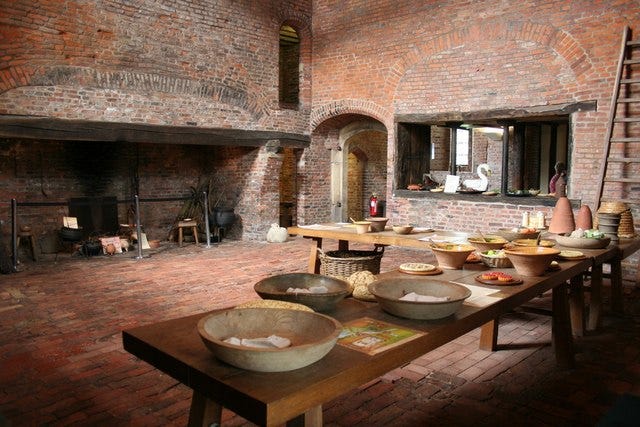
Today’s extract is from The Anarchy (Meanda Books, 2023).
1136, Dinefwr Castle, a Welsh stronghold.
Nest ferch Rhys is the sister of Gruffudd ap Rhys, who has recently defeated the Normans at the Battle of Crug Mawr and reclaimed his title as King of Deheubarth (southwest Wales). Haith is the Flemish sheriff of Pembroke, in service to the Normans. Nest had been married to the Norman constable, Stephen de Marais, who was killed at Crug Mawr.
The Anarchy
Chapter 37, The Princes of Deheubarth
Haith’s hands were freezing, despite his gloves. His toes too. His hair was stiffened with ice. It was a freezing winter, and he had been in the saddle for six hours on the journey from Pembroke. It was a long ride for a man in his sixties, but he had not wanted to stop anywhere on the way and explain his excursion to a curious host. His old battle wounds ached with the cold, especially his shoulder where he had taken an arrow on the road from Cardiff, close to the Tywi. Nest had saved his life that day. Snow lay heavy on the trees and fields and dripped cold onto his shoulders whenever it got the chance. Snow in sunshine could be a fine sight, but it was a darkening, grey day and Haith felt oppressed by the weather and by the uncertainty of what he was riding toward.
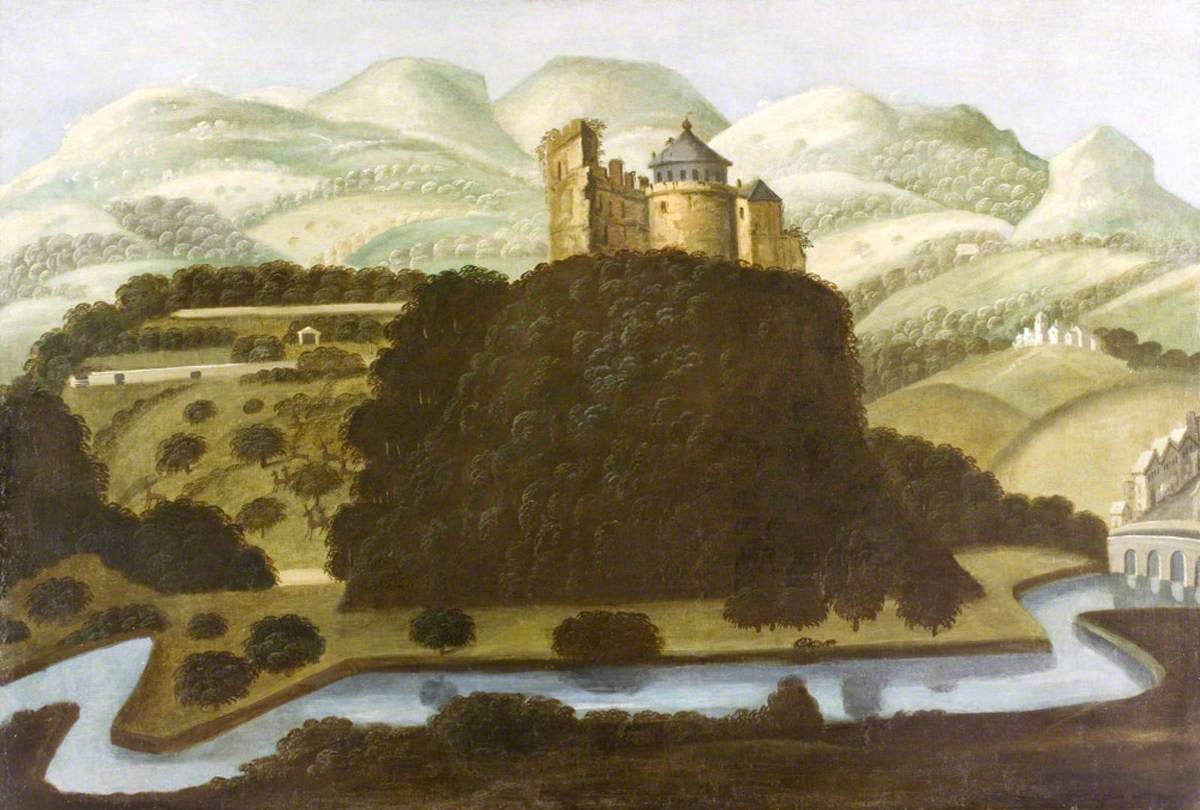
Dinefwr was visible now. The rough wooden ring-fenced compound stood high on the ridge above the expanses of the Towy valley floodplains that he rode through. Three smoke trails rose from hearths inside the compound. Gruffudd ap Rhys and his family had taken up residence here, but it looked, as yet, to be a hasty, ephemeral structure. Haith’s horse laboured up the steep incline toward the gates and, as he neared, he could see the place was heavily guarded. Nest had written to invite him to spend Christmas here with her, and with his sister and son. It was an olive branch from her and one he was not going to spurn. But, as a Norman sheriff, Haith had good cause to feel anxious anticipation at passing under the lintel of this Welsh enclave.
He had a gift of a fine knife in his saddlebag for the boy, for his son. There were small, jewelled and filigreed brooches for Amelina and Ida, and a shimmering girdle decorated with gold and gems for Nest. He had more small gifts for the family of his host and Lady Isabel had gifted him four bottles of good wine that were also filling out his saddlebags.
‘This should earn you some kind of welcome, Haith,’ she smiled. ‘I’m sorry you won’t be with us for the Christmas feast at Pembroke.’ She had frowned at him, perplexed at his journey.
It had been difficult to explain the invitation since he could name neither Ida nor his son as reason. He was forced to lie and give an unlikely excuse about previously unheard-of Flemish relatives and the king’s orders, when everyone knew King Stephen’s writ was running rather thin in Wales. Isabel looked at him askance but asked no further questions. Her husband was away attending on the king, but she would be safe enough in Haith’s absence behind the impregnable walls of Pembroke Castle. Few Welsh tenants had paid their taxes on the last collection day, and they were very likely paying tribute instead to Nest’s brother. The returns Haith could send on to King Stephen’s coffers had been thin pickings. Haith continued to undertake his duties as sheriff as best he could, but the machinery of Henry’s administration was grinding to a halt. That part of Haith’s life would soon be done with, buried with Henry, and he did not know what came next.
Once past the guards at the gateway who had been surly but expected him, he found the courtyard deserted. The inclement weather must be keeping everyone inside. Haith grimaced again at his aches and pains as he dismounted and limped his way toward the stables, leading his exhausted horse. Here, at last, he found signs of life. There was a boy seated on a haystack and Haith commanded him to see to the horse. The boy told him in Welsh that he was a fewterer, not a groom, and Haith would have to shrift for the horse himself. Haith resisted the urge to clout the boy. It would not do to raise any hackles here. So he shrifted, finding a hay-net and water and relieving his stallion of his heavy accoutrements. He rubbed him down, checked his hooves, unrolled a blanket, and slung it over the horse’s back. ‘Where is everyone?’ he asked the boy in his poor Welsh and had to repeat the question three times before the boy decided to understand him and give him an answer.
‘In front of the fire.’
‘And you?’ Haith asked. ‘Why aren’t you there?’
The boy indicated a box at his feet, and Haith peered inside at a litter of six mastiff puppies. ‘Looking after these,’ the boy stated, shivering.
‘Ah, I see.’ Haith took the thick bearskin cloak from his shoulders and held it out to the boy, who widened his eyes in disbelief and did not take it at first. ‘Take it,’ Haith shook it toward the boy, ‘but I want it back, mind, for my return journey.’
The boy, grateful at last, pointed out the door to the hall – one of the least ramshackle wooden buildings in the compound. ‘In there, Master. Those big doors.’
Haith pushed at one side of the door with his shoulder. It opened complaining on unoiled hinges and just enough to allow him to squeeze in. To Haith’s surprise, the hall was full. He shouldered the door closed again behind him. Ten trestles ran the length of the space, all fully occupied with men, women, and children squeezed close together. At the far end, on the raised dais, Nest raised a hand to him. With his loaded saddlebags in hand, he started down the hall, but an enormous Welshman stepped in front of him, speaking angrily in Welsh and pointing at Haith’s sword. Haith gestured apologetically and transferred both saddlebags to one hand, to slowly draw his sword from its scabbard and lay it to one side of the door. All eyes were fixed upon him as he did so. He noticed there were no other weapons set at the threshold and other men seated at the trestles were wearing their armoury at their hips.
Nest’s brother, Gruffudd ap Rhys, rose to greet him, and Nest smiled warmly in welcome. ‘I’m so glad you decided to come, Haith,’ she said. ‘Be welcome.’
….
At last the sumptuous feasting was done with and they rose from the table to the loud scrape of benches as all went about their business and servants began to clear the trestles. Haith counted a good hundred men. How was Nest’s brother managing to feed so many? There must be some truth in the rumours that Nest had assisted Gruffudd to run a secret gold-mining operation. As the only Norman-allied man here and as a sheriff responsible in the eyes of these Welsh for past harsh taxes, he felt resentment pressing on him as he moved through the courtyard to check back on his horse and the fewterer with the puppies.
….
The conversation was stilted, and Nest cast anxious glances in Haith’s direction. This was a Christmas feast, and antagonism could not breach the bounds of hospitality. And yet, there had been occasions on both sides when exactly that had happened, when someone was invited to a feast and then been betrayed to murder or imprisonment.
Carrying a guttering candle, Amelina led Haith down a very long passage, to a small, comfortable room at the end with a view out over the darkening moat.
‘Am I in exile here?’ Haith asked, making a joking reference to how far away from the rest of the household he seemed to be.
‘Best place for noise,’ Amelina announced in a deliberately mysterious tone.
‘Noise?’ Haith felt a little concerned. Was there a plot to murder him in his bed? He fondled the hilt of his sword.
Amelina tapped her nose. ‘You’ll see.’
The fire was lit in the hearth, and the bed was comfortable. Haith looked at the door, worry knitting his brow. Noise? He wasn’t sure he could disrobe and climb into bed with some threat hanging over him. But Amelina had smiled and seemed happy about whatever it was she hinted at. She wouldn’t be happy to see him murdered. Perhaps it was something to do with the children – singing Christmas carols or hanging stockings on doorknobs or the like. What would be the point in murdering him? There would only be a meagre symbolic value in assaulting the sheriff of Pembroke. And whatever the degree of estrangement between them, Nest would surely not conspire at his death.
Haith bent and slowly untied his boots, padded across the cold tiles in his stockinged feet and placed his boots neatly near the door. He unbuckled his sword belt and leant it against the bed, close to the pillow. He looked at the door for a few more minutes, swirling the wine in his mouth and swallowing it. There was no sound. Only an owl outside, beyond the moat.
Feeling foolish, he looked under the bed. Nothing there, of course, except clumps of dust. He removed his breeches. He was bone-tired from his long ride, from the wine, from the heat of the fire, and from the strain of being polite in the midst of tense hostility. Yet he was reluctant to close his eyes in sleep. He removed his shirt and lay on the bed naked, one hand on his sword. He turned his head to look at the candle on the table next to him that Amelina had lit from her own. There wasn’t much of it left. The fire, too, was starting to burn low and the room would soon grow chilled without it. He could see no more wood in the room. No servant would hear him call down the length of the dim passageway beyond the door. He watched the candle burn down into a misshapen lump of pooled and cooling wax. It spluttered for a while and then died, plunging him into near-darkness, but there was still a dim, red glow from the fire. He thought he heard a sound in the passageway beyond the door. The door-latch scraped as it lifted. Haith lay on the bed as if asleep and gripped the handle of his sword. If there were many of them, he would not stand much chance.
‘Ow! God’s bollocks!’ She stumbled over his boots at the door.
‘Nest?’ He released his grip on the sword and raised himself on one elbow.
‘Haith? I can’t see a thing.’
‘Me neither.’
In the gloom, he glimpsed a long, white chemise as she lifted it over her head and dropped it to the floor.
….
‘Will you send me packing, sweet Nest, when you have had your fill of me, as you did de Marais?’ he asked.
‘I will never have my fill of you and don’t compare yourself to him.’ He could not see her face, but he could hear her smile. She gripped her fingers deep into his hair and he hugged her fiercely to him. ‘We live. We flare. We do our best. We make mistakes. We die.’ Nest’s mouth murmured against the skin of his neck. ‘We must keep trying to flare until we are dust. I had to take the chance that you still cared for me.’
Medieval recipe: Cawl
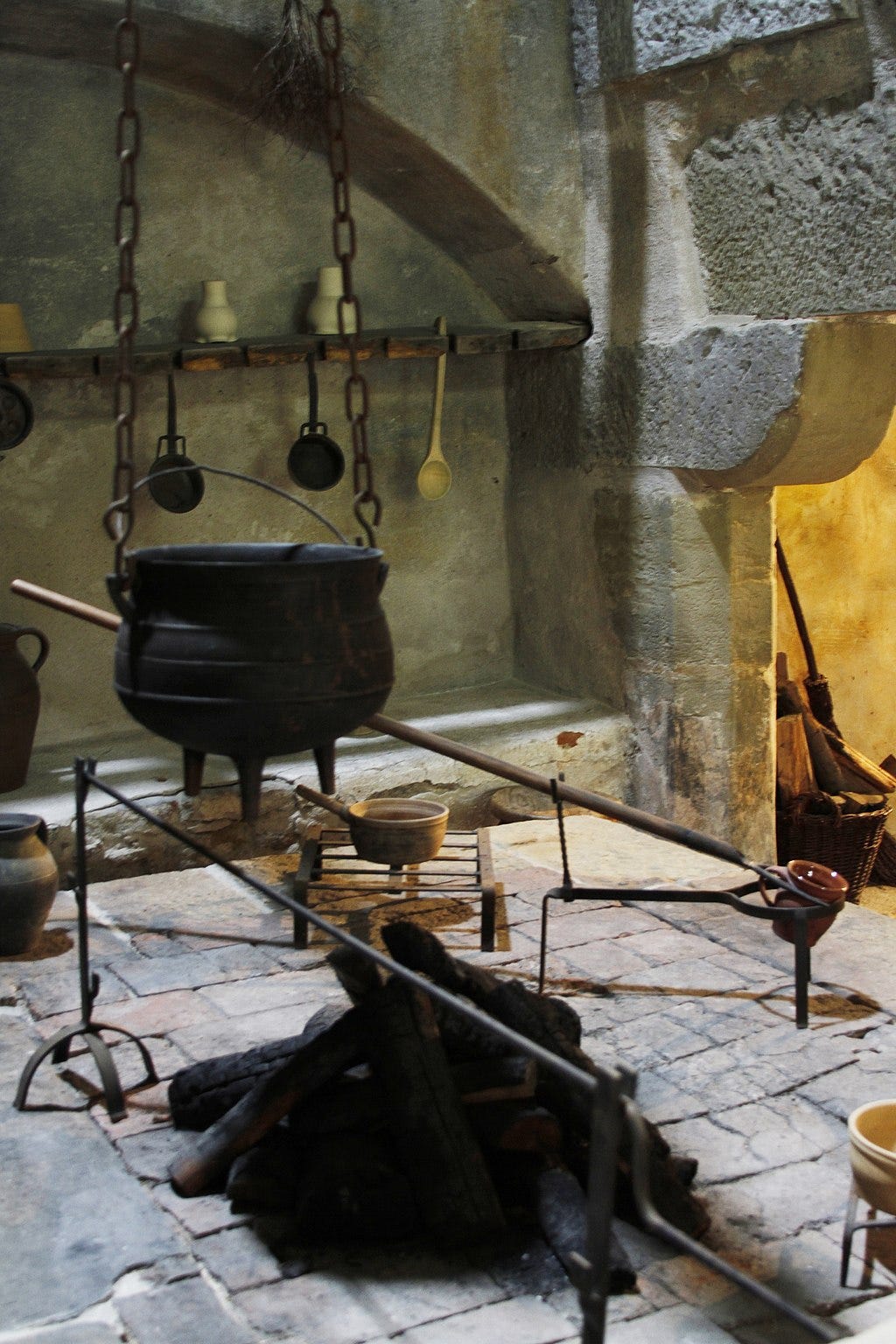
Cawl (meaning soup or broth) is an ancient Welsh recipe for the winter. It was an unassuming meal and might have been eaten in between the richer Christmas feasting. It was cooked over a fire in a cauldron suspended with chains from a tripod. Contemporary cawl would include potatoes but they didn’t arrive in Europe until 16th century and weren’t widely adopted in Wales until the 18th century. Turnip and swede were also not planted in Britain much before the 18th century. Medieval cawl was thickened with oats instead. The earliest varieties of carrots would have been yellow or purple. Cawl might be served with dumplings. You could eat it with Welsh lovespoons.
3hrs 30 mins
1kg of lamb, bone in (neck or shin or shoulder)
Onions, wild garlic, leeks, carrots, any root vegetables that are available
Oats
Parsley and thyme
An element of improvisation is fine. You could add a handful of cockles, for example.
Bread
Cheese
1. Put the lamb in a large saucepan and cover with water. Bring to the boil, then reduce to a simmer, scooping off any scum that rises to the surface. Cook for 2-3 hrs until tender and falling off the bone.
2. Once the meat is cooked, add the vegetables to the pot and season with salt and pepper. Simmer for 20 mins, then add the leek and cook for 10 mins more. Taste to check the seasoning, then add the parsley.
3. Just before serving, remove the meat and bones from the pan. Shred or chop the meat into bitesize pieces before returning it to the pot. Serve the cawl in bowls with bread and cheese on the side.
Interesting recipe. Thanks for sharing.