
Medieval Bones
Paleoimaging

I’m currently investigating the possibilities for paleoimaging to gain insights into the life of an 11th-century French woman I’m researching, so I was fascinated to see what could be discovered from other medieval bones. Paleoimaging? What’s that? Read on ….
Emma of Normandy was the daughter of Duke Richard of Normandy and Duchess Gunnor. She was born around 984. Aged 18, she married King Aethelred of England in 1002. Viking raids against England in the late 10th century were often supported from Normandy, since the Normans had themselves recently been Vikings and Emma’s marriage was intended to improve Anglo-Norman relationships.
In 1013, Swein Forkbeard invaded England and Emma, Aethelred and their family had to briefly take refuge in Normandy.
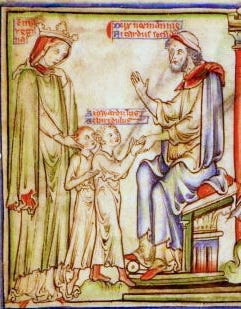
Swein died in 1014 and the family returned to England but then Cnut invaded England in 1015. After Aethelred died in 1016, Emma married Cnut. Harthacnut, Emma and Cnut’s son became king of England in 1040. When Harthacnut died in 1042, Emma and Aethelred’s son, Edward the Confessor, became king.
Emma was the richest woman in England and queen for around 37 years. She advised her sons, as she had advised her husbands and was at the centre of English politics throughout her life. Emma gave the Norman dukes a hereditary claim to the English throne, which led to the Norman Conquest in 1066.
Emma of Normandy died on 6 March 1052 and her body was interred in a mortuary chest in the Old Minster in Winchester, alongside other mortuary chests with inscriptions stating that they contained the remains of at least six Anglo-Saxon or Anglo-Danish kings, including Emma’s son King Harthacnut and two Anglo-Saxon bishops.
The Old Minster was built in 648 by King Cenwalh of Wessex. In 901, Alfred the Great started building the New Minster on the same site and he and his family were buried there.
In 1079, William the Conqueror’s bishop Walkelin started building a huge Norman Cathedral on the site. When it was consecrated in 1093, the caskets holding the remains of the Anglo-Saxon kings and queen were moved from the Old and New Minsters and previous buildings were demolished. In 1107, the central tower of the new cathedral fell and had to be rebuilt. The bones of King Alfred and his family were moved to Hyde Abbey and were later lost.
Richard of Normandy, the second son of William the Conqueror and Queen Matilda who died young in a hunting accident was interred in the mortuary caskets in the cathedral, as was his brother, King William II (Rufus). These painted wooden mortuary chests were displayed either side of the high altar for hundreds of years.
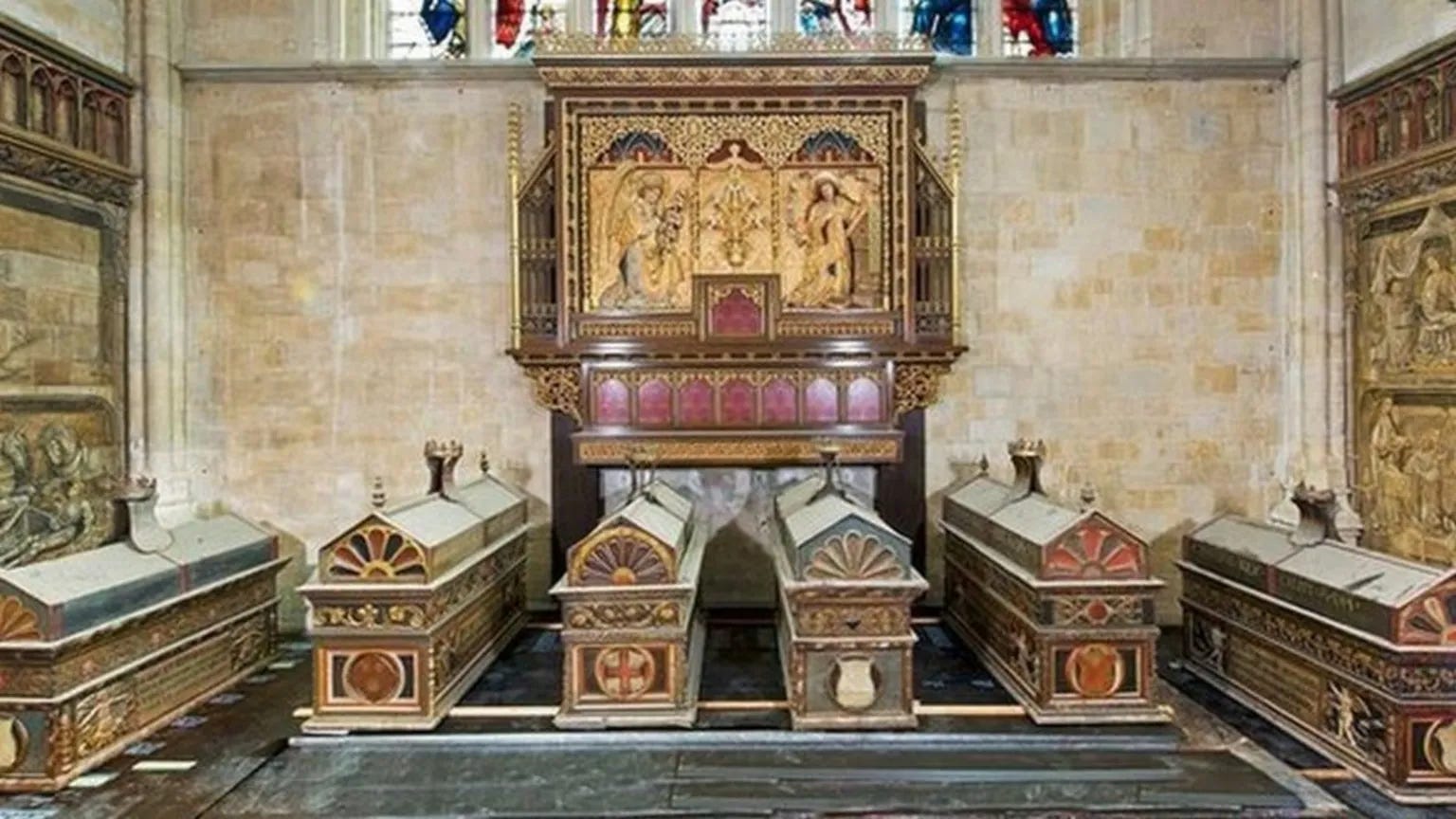
In the 17th century, Cromwell’s parliamentary forces scattered the contents of the six mortuary chests containing the bones of the Anglo-Saxon royals, including Queen Emma. These bones were later reinterred but were jumbled up.
In 2019, the six mortuary chests with over 1,300 jumbled bones underwent investigation. The bones had been well preserved in the coffins. The researchers used paleoimaging, radiocarbon dating, and DNA sampling, which were considered alongside the historical record.
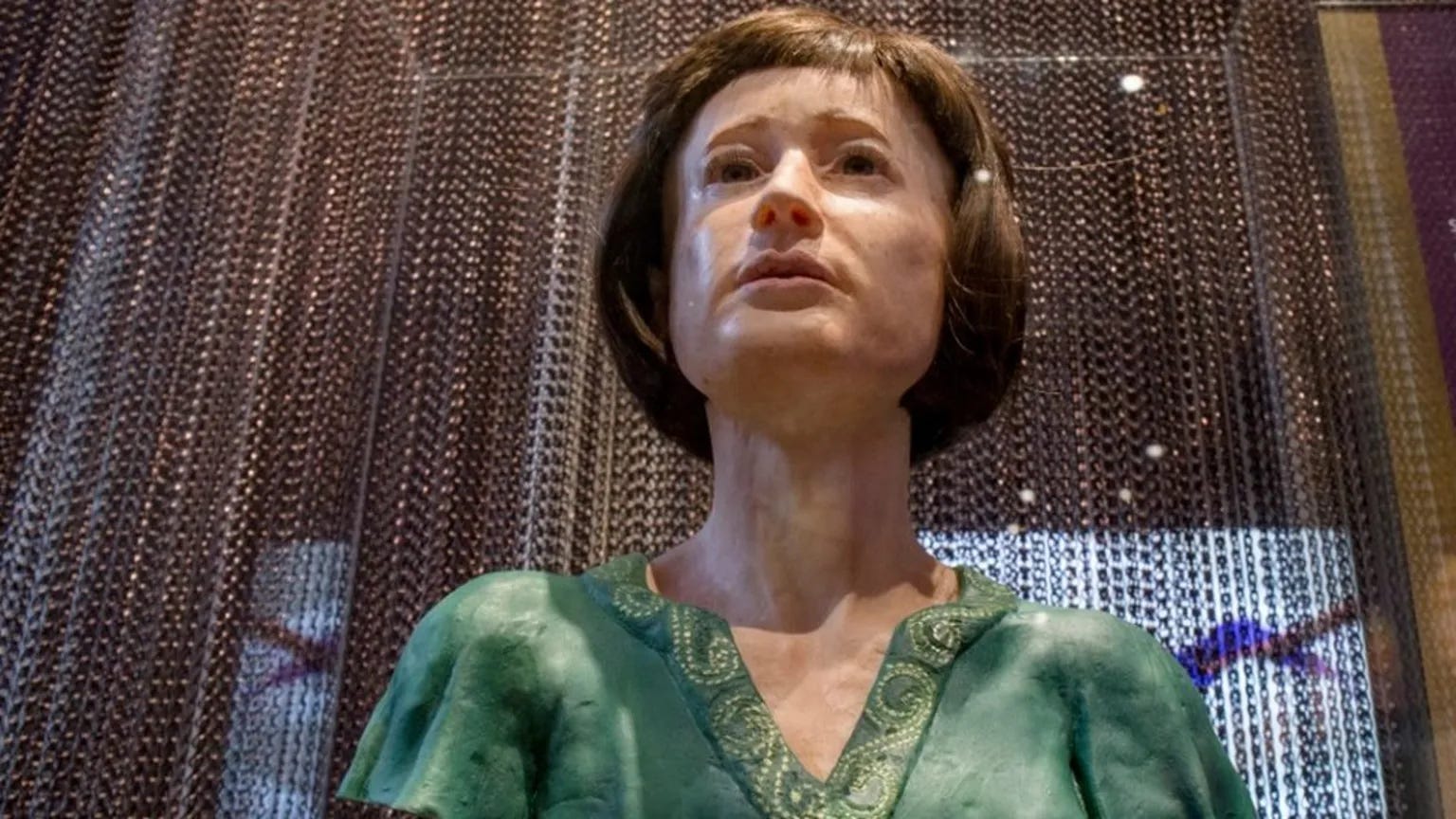
The researchers identified Emma’s bones as those of the only mature woman, along with those of 22 other individuals, including two boys of royal blood, aged between 10 and 15 who lived 1050–1200 (BBC News, 2019). The facial reconstruction of one of the boys (who are not the Princes in the Tower) and some of the bones are on display in the Kings and Scribes: Birth of a Nation exhibition at Winchester Cathedral (n.d.).
The discovery and identification of King Richard III’s skeleton in Leicester in 2013 is another recent story of historical, archaeological, and scientific collaboration (University of Leicester, n.d.; Wikipedia, 2025).
Emma of Normandy’s long reign as queen of England continues into the afterlife with this fascinating historical and scientific enquiry into her burial.
More on medieval paleoimaging coming up in future posts….
A version of this post was originally posted on the Facebook group France’s Splendid Centuries.
SOURCES
BBC News. (2019, 16 May). Queen’s bones found in Winchester Cathedral royal chests. https://www.bbc.com/news/uk-england-hampshire-48281733
BBC News. (2019, 18 May). The riddle of Winchester Cathedral’s royal skeletons. https://www.bbc.com/news/uk-england-hampshire-48300450
University of Leicester. (no date). Richard III: Discovery and identification. https://le.ac.uk/richard-iii/
Wikipedia. (2025, 6 October). Exhumation and reburial of Richard III of England. https://en.wikipedia.org/.../Exhumation_and_reburial_of...
Winchester Cathedral. (no date). Kings & Scribes. https://www.winchester-cathedral.org.uk/welcome/exhibitions/